- Email: info@bggsconsulting.com
- Phone: +61 3 9972 5444

Background
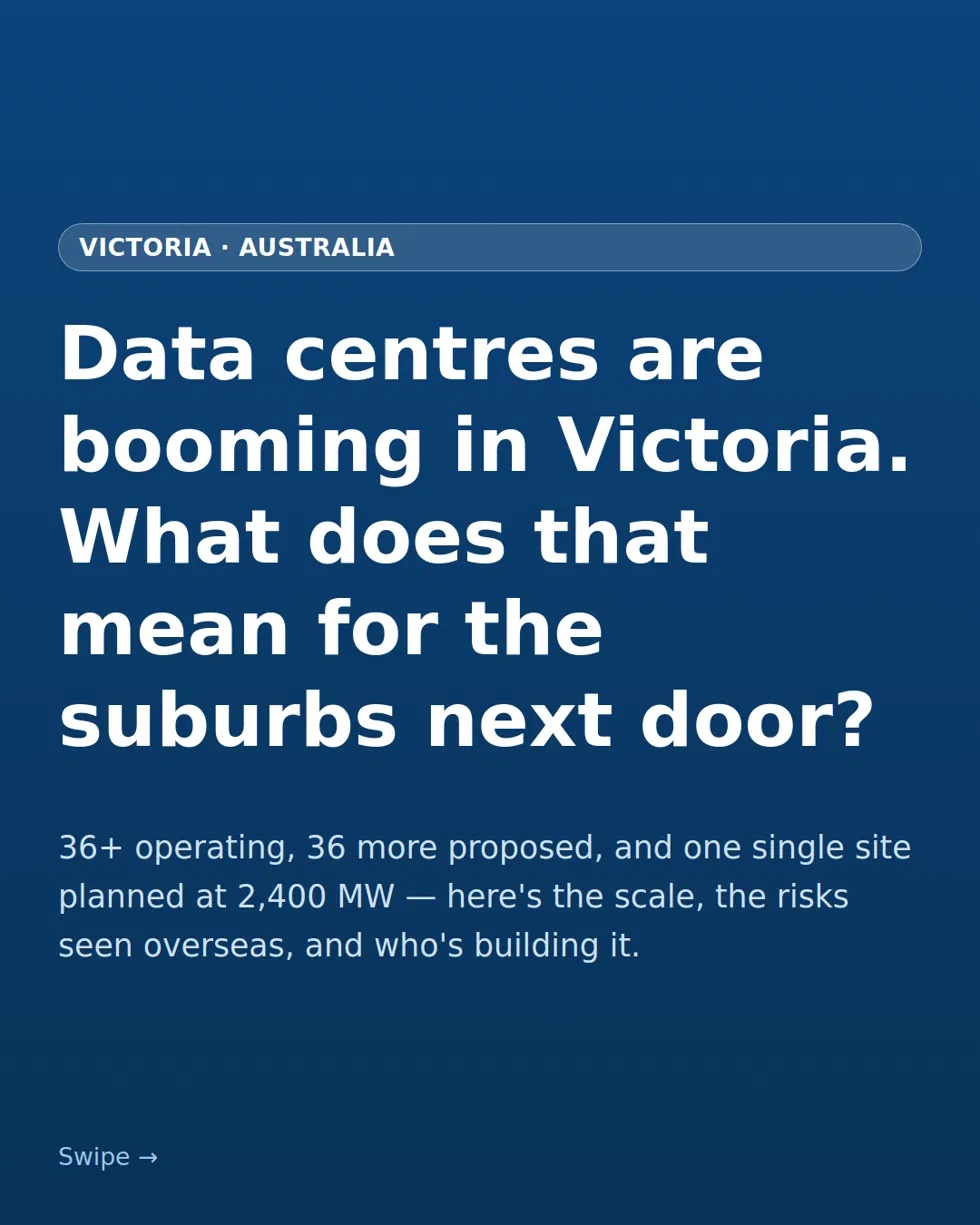
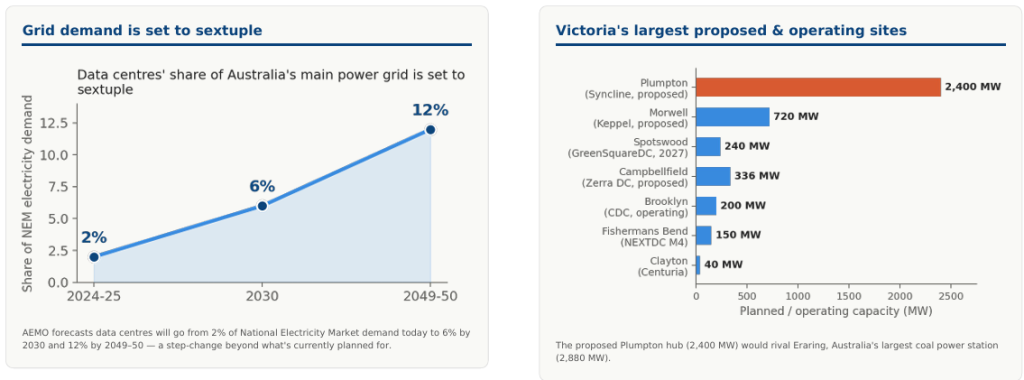
Victoria currently has 36+ operating data centres, with another 36 in the pipeline (Aug 2026). The single largest proposal — the “Victorian AI Hub” in Plumpton — would run at 2,400 MW, rivalling Eraring, Australia’s biggest coal power station. Nationally, AEMO forecasts data centres will go from 2% of electricity demand on the National Electricity Market today to 6% by 2030, and 12% by 2049–50 — a step-change beyond what current grid planning accounts for.
The industry’s economic pitch is real: Victoria’s tech sector contributes $34bn to the state economy, and government and developers are framing this as sovereign AI infrastructure and jobs.
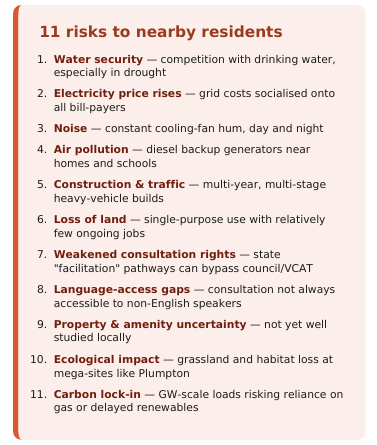
Key concerns driving community opposition:
But overseas experience is worth watching closely:
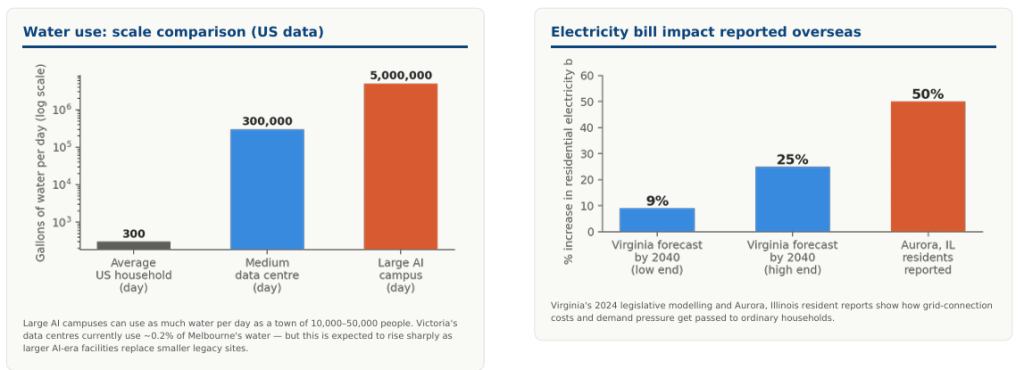
📊 US data centres consumed 163.7 billion gallons of water directly in 2021 alone — large AI campuses can use as much water per day as a town of 10,000–50,000 people.
💡 A 2024 Virginia legislative study forecast residential electricity bills could rise 9–25% by 2040 due to grid strain from data centre growth. Residents in Aurora, Illinois reported bills up ~50%.
🤝 Researchers found 25 of 31 Virginia communities with data centre projects had non-disclosure agreements between developers and local officials — raising real transparency questions.
🌱 Global data centre electricity use is projected to nearly double by 2030, working against climate targets even as major operators publicise net-zero pledges.
Locally, we’re already seeing early signals of the same dynamics: resident petitions over the Campbellfield and Plumpton proposals, MPs flagging consultation gaps (including for non-English-speaking communities), and concerns about ecological impact on Melbourne’s western grasslands.
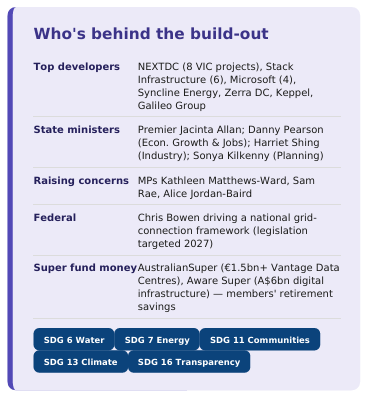
Behind the build-out: major developers like NEXTDC, Syncline Energy, Zerra DC, Keppel and Galileo Group; state ministers driving investment (Premier Jacinta Allan, Danny Pearson, Harriet Shing); and — often overlooked — billions in Australian superannuation money (AustralianSuper, Aware Super) flowing into the sector.
Lessons learnt:
As AI adoption accelerates, communities are increasingly asking a critical question: How do we balance digital innovation with sustainable use of energy, water, and public resources? The future of AI infrastructure may depend as much on social licence as on technological capability.
Would you like to discuss this topic further or need assistance in understanding how to convert these into actionable items for yourself or your organisation?
Book a Complementary Free discussion session TODAY! Drop us an email: info@bggsconsulting.com / Book Online
If you found this article helpful, kindly drop a comment or follow us to keep receiving regular insights!